Parkinson Disease Treatment in Meerut
Parkinson’s disease (PD) is a long-term, progressive neurological disorder that affects movement, coordination, and cognitive function. It is one of the most common neurodegenerative diseases worldwide, primarily affecting older adults but occasionally seen in younger individuals.
While Parkinson’s disease currently has no cure, modern medical science offers several effective treatment strategies that can greatly improve symptoms and help patients maintain a high quality of life.
This article explores the various treatment options available for Parkinson’s disease, including medications, surgical methods, lifestyle changes, and rehabilitation therapies.
Understanding Parkinson’s Disease
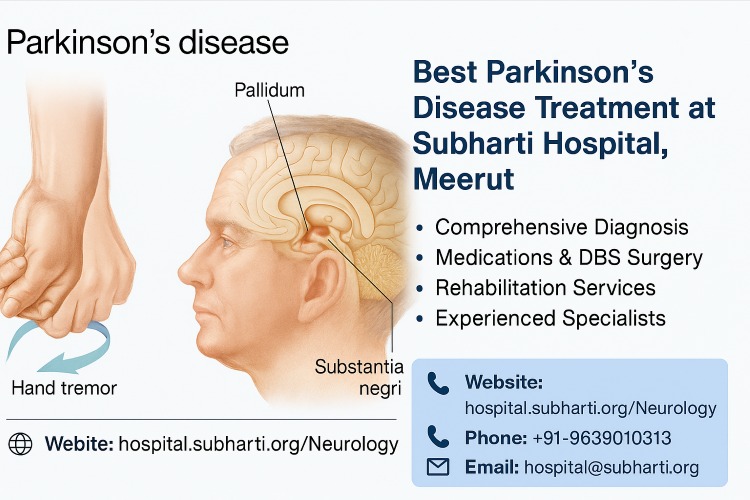
Parkinson’s disease occurs due to the loss of dopamine-producing neurons in a specific part of the brain called the substantia nigra. Dopamine is a neurotransmitter responsible for smooth and coordinated movement. As dopamine levels decline, patients begin to experience a range of motor and non-motor symptoms.
Common Symptoms:
- Tremors (shaking of hands, legs, or face)
- Muscle rigidity and stiffness
- Bradykinesia (slowness of movement)
- Postural instability and difficulty with balance
- Changes in speech and writing
- Depression, anxiety, and sleep disturbances
The severity and progression of symptoms vary widely from person to person, which is why treatment must be personalized.
Treatment Options for Parkinson’s Disease
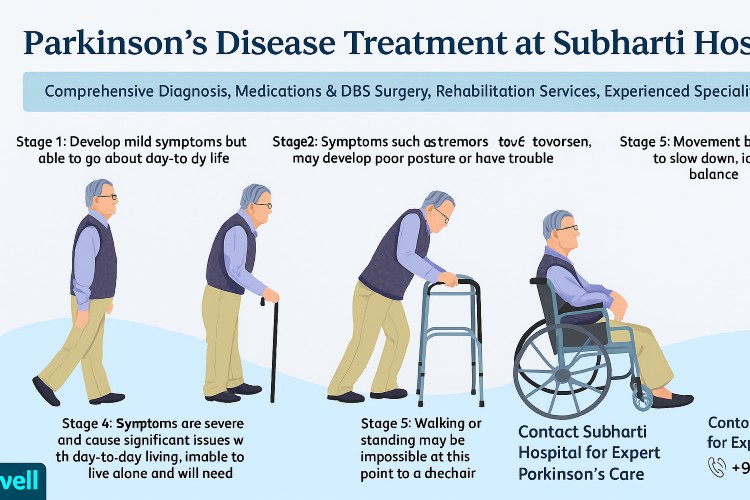
Parkinson’s treatment involves a multi-disciplinary approach. Since the disease progresses over time, the treatment plan is adjusted at different stages.
1. Medication Therapy
Medications are the cornerstone of Parkinson’s treatment. They help replenish dopamine or mimic its action to control motor symptoms.
- Levodopa + Carbidopa
- Levodopa converts into dopamine in the brain.
- Carbidopa prevents Levodopa breakdown and reduces nausea.
- Prescribed in early or moderate stages.
- Dopamine Agonists (e.g., Pramipexole, Ropinirole)
- Mimic the effects of dopamine.
- Used in early stages or with Levodopa later on.
- MAO-B Inhibitors (e.g., Selegiline, Rasagiline)
- Prevent dopamine breakdown.
- Used alone or with Levodopa.
- COMT Inhibitors (e.g., Entacapone, Tolcapone)
- Extend Levodopa effect by blocking breakdown.
- Amantadine
- Provides relief from dyskinesia.
- Used in early stages sometimes.
2. Surgical Treatments
Surgery is considered when medications are no longer effective or cause disabling side effects.
Deep Brain Stimulation (DBS)
- Electrodes are implanted into the brain to regulate abnormal activity.
- Connected to a chest-implanted pulse generator.
- Benefits:
- Reduces tremors, stiffness, and motor fluctuations.
- Reduces medication dosage.
- Improves daily functioning and quality of life.
Subharti Hospital in Meerut offers DBS performed by expert neurologists and neurosurgeons using advanced technology.
3. Physical and Rehabilitation Therapy
- Physiotherapy: Improves mobility, posture, and strength.
- Occupational Therapy: Aids in daily activities using adaptive tools.
- Speech Therapy: Improves speech, voice, and swallowing.
4. Lifestyle Modifications
Daily self-care routines and habits play a big role in symptom control:
- Exercise: Walking, yoga, tai chi, cycling, etc.
- Balanced diet: Fiber-rich and hydrated meals.
- Sleep hygiene: Proper bedtime routines.
- Mental stimulation: Reading, music, puzzles, hobbies.
5. Psychological and Emotional Support
Living with Parkinson’s is emotionally taxing. Subharti Hospital offers:
- Counseling and therapy sessions
- Support groups
- Medications for depression/anxiety (if needed)
6. Emerging and Alternative Therapies
Promising ongoing research includes:
- Gene therapy
- Stem cell therapy
- Neuroprotective medications
- Wearable and AI-based monitoring tools
These are mostly in trial phases but offer hope for the future.
Parkinson’s Treatment at Subharti Hospital, Meerut
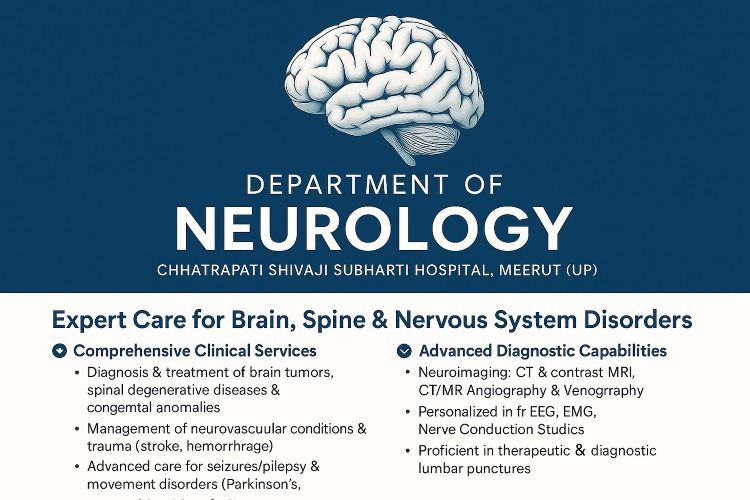
Subharti Hospital offers comprehensive care through its Neurology Department, supported by skilled professionals and advanced equipment.
Key Features:
- Advanced diagnostics (MRI, PET, Neuroimaging)
- Tailored medication strategies
- Expert DBS surgeries
- In-house rehabilitation
- 24x7 emergency neurology service
- Mental health support and caregiver training
Final Words
Parkinson’s may be progressive, but early diagnosis and multidisciplinary care can significantly enhance quality of life. Patients can live independently for many years with timely medical support, rehabilitation, and emotional care.
If you or someone you know is showing signs of Parkinson’s, seek a consultation as early as possible.
Share